This page gathers the main bidding systems of the world, from natural to highly artificial: Standard American and 2/1, Acol, strong club and Precision, relay and forcing pass systems, French systems and five-card majors, plus hand evaluation and the systems played by bridge robots. See also Building a system, Conventions and Systems with my partners. PDF files are marked [PDF].
General resources Natural Systems Acol Strong Club Precision Forcing Pass Lesser-known Systems French Systems Five-card Majors Hand Evaluation Robot systems My partners
General resources
Collections

- Bidding System on Wikipedia
- Bridge Bidding systems on Bridge Guys
- Bridge Bidding Systems on Bridge Bum
- Bridge Systems on BBO
- Bridge Systems, David Morgan (Relays)

- Bidding Systems, Graeme Williams
- All systems on Syskon.nu in Swedish
- Popular Bridge Bidding Systems on Bridge Hands
- Systémothèque, banque de Feuilles de conventions, JP Rocafort
- Systèmes des championnats du monde et d’Europe sur E Cats
Videos
- System On with Sjoert Brink [vidéo]
- System On with Andrea Manno [vidéo]
- System On with Joe Grue [vidéo]
- System On with Krzysztof Martens [vidéo]
Philosophy
- David Collier’s posts on Bidding systems and Theory
- Le Choix d’un Système, Jean-Pierre Rocafort [PDF]
- Typologie des enchères, Jean-Pierre Rocafort [PDF]
- Interview de Thomas Bessis à propos des systèmes, sur Big Bang Bridge, traduit et adapté par Daniel Delestre [PDF]
- What is the bridge system that has most impressed you? Barry Rigal on Bridge Winners

How to turn everybody’s “standard system” into an effective, modern system, with ideas tested in real play.
- System archetypes, Greg Earnest
- Building a Bidding System, Book, Roy Hughes
- Building a practical System, Liam Milne [PDF]
- How much has Bridge changed in 75 years, Jeremy Dhondy [PDF]
- European Bridge League Systems policy [PDF]
- Bold, Phil RoquemoreThe mission of Project BOLD is to develop an exciting new bidding system that dominates the modern bridge metagame.
Systems
- Why Four Card Majors ? Marvin French
- Debate A strong Club system is much better than Acol, Jeremy Dhondy and Chris Jagger on EBU December 2009 [PDF]
- On the Structure of Natural Bidding System, Bert Beentjes [PDF]
- Natural Bidding in Bridge, the sevenfold way, Johannes Koelman
- What does Natural mean ? David Collier
- Les systèmes étrangers, Alain Lévy, dossier de l’As de Trèfle [PDF]
- Systèmes artificiels sur Roquibridge
- GIB: Steps Toward an Expert-Level Bridge-Playing Program Matthew L. Ginsberg [PDF]
- World Championship system Review, Glen Ashton [PDF]
- Everybody needs a coach, Krzysztof Martens.
- Norberto Bocchi, the Big Bang interview Norberto talks about his bridge system and the importance of vulnerability
Natural Systems
Standard American Ancestors
- Standard American Bridge, Richard Pavlicek
SAYC Standard American Yellow Card
The system of many novice players online, and a common pickup system.
- What’s Standard ? Is Standard American a myth, David Lindop [PDF]
- ACBL SAYC System Booklet [PDF]
- Standard American Yellow Card Revised and Expanded by Mark London Further Revised, Wayne Burrows (Jan 2007)
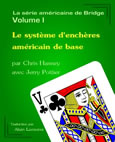
2 over 1 System
Close to Standard American, descending from the Roth-Stone (1950s) and Kaplan-Sheinwold systems. From Bridge Hands.
- Roth Stone System developed by Alvin Roth and Tobias Stone in 1953, Graeme Williams
- Kaplan Sheinwold updated, Edgar Kaplan
- 2 over one System on Bridgehands
- Unifying 2/1 GF, Larry Cohen
- Improving 2 over one Game force, Fred Gitelman
- 2 over one Game force system, Neil H. Timm PDF [PDF]
- The Great 2 over one debate, Bob MacKinnon
- Eastern Scientific, Richard Pavlicek. Quite similar to the Standard American, also known as Walsh system
- Pavlicek System PDF [PDF]
- BWS Bridge World Standard (BWS) encapsulates common American expert practices
- Bridge Bulletin Standard The system used by the “It’s Your Call” panel: more than SAYC, less than a full 2/1 system. [PDF]
Acol, the English Bidding System
- Standard English Acol [PDF]
- Acol Système d’enchères anglais, Michel Heger
- Convertir l’Acol en SAYC, Michel Heger

Other Natural Systems
EHAA, “Every Hand An Adventure”: an aggressive natural style from the late 1950s, with mini notrumps, wide-range weak twos and four-card majors. More a style than a fixed system, according to Eric Landau.
- EHAA FAQ
- Finnish Standard Bidding System on Jukka Korpela’s Bridge Page
- Romex Bidding System
- Science Simply Scientific Four Card Majors [PDF]
- Standard Dutch Bidding System, now five-card major, Tjoen Oei
- We Bad, a scientific five-card major system played by Don Weiner and Dave Babcock [PDF]
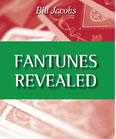
Fantunes
Strong Club Systems
- Big Club Standard, Howard Schenken on Bridge Bum
- Eastern Mysticism, Elliot Thomas Grant employs best elements of a strong club opening, a weak notrump, 2-over-1/forcing NT, and the Law of Total Tricks
- Millennium Club from the book by Lyle Poe, notes, Daniel Neill
- The Composite Club, Bill Hodgkiss
- Hilversumse Klaveren, a big club system, Michiel Geelen and Jan Veerbeek 2021 [PDF]
MOSCITO short for Major Oriented Strong Club
originally invented by Paul Marston and Stephen Burgess
- Symmetric relay system, Moscito versions and variants, David Morgan
- Scamp system, Nick Hughes’ Moscito variant
- Terrorist’s Moscito adaptation, Bo-Yin Yang [PDF]
- Moscito Byte (Moscito for GIB) [PDF]
- Cobra computer-designed bridge bidding system developed by E. T. Lindelof and similar to Schenken Club
- Toad Club, Jim Griffin [PDF]
AUC, Unassuming Club, member of “intermediate clubs” that includes Vienna System, Roman Club, Polish Club, New South Wales Club, Bogota Club, and Power System
- Unassuming Club, Don Varvel
Weak/Strong Club System

- Magic Diamond light [PDF]
- Livorno or the Leghorn Diamond System developed by Benito Bianchi and Giuseppe Messina on Bridgeguys
- Strong Diamond System, Noble Shore and Mike Gill [PDF]
- System Dutch Doubleton used by the international Dutch team
- Tangerine Club, ClementinKlover in Swedish, Jan Eric Larsson a simple, systematic version of a weak/strong 1 Club and light 4 card suit openings. [PDF]
- Bocchi-Duboin system Notes on Ecats [PDF]
- A Bocchi Duboin System review, Paolo Garrisi [PDF]
- Polish Club, Greg Matula

- Delta Club, David Morgan
Artificial 1♣/1♦ Systems
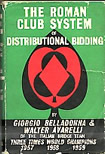
- Roman System, Bernard Utner, based on Giorgio Belladonna’s “nuovissimo fiori romano” with some enhancements and modernisations. [PDF]
Precision Systems

Invented by C. C. Wei in the late 1960s, made famous by Taiwan in the 1970 and 1971 Bermuda Bowls, then refined by the Italian Blue Team as Super Precision. Today the leading strong club system, used by Meckstroth and Rodwell as the basis of theirs. From Oliver Clarke’s Precision Club page.

- Articles about the Precision Club Bidding system on USA.bridge.com
- Precision and Super Precision, Giorgio Belladonna and Benito Garozzo from Tutto Bridge [PDF]
- The Revision Club System 4th Ed. 2009, John Montgomery
Meckwell System

- The K-Club, a precision system played in Kingston, Ontario, Ken Allan [PDF]
- The K-D Club based on the K-Club but employs the full panoply of Italian bids PDF, Ken Allan

precision-like system, featuring light limited openings – weak notrumps, and an artificial forcing bid
- Mellon Diamond, Adam Meyerson and Noble Shore [PDF]

Symmetric Relay System
similar in many ways to Precision Club but using relay continuations over all of the openings.
- Professor Roy Kerr Symmetric Relay System modified, Richard Hills 2000
- Symmetric Relay System, Ljudmila Kamenova [PDF]
- TOSR 4-Card Transfer-Oriented Canapé Symmetric Relay System on Mark’s Bridge Bidding Systems [PDF]
- Volmac Precision developed by Garozzo for the Dutch team on Daniel’s System page
- ULTRA CLUB Relay, Dwayne Hoffman & Larry Lowell [PDF]
- Ultra attempt, John Lowenthal and Phillip Martin to improve the Ultimate Club. [PDF]
- SuperSpades, Mark Donovan [PDF]
- Super Spade in Bridge Magazine’s Bidding Challenge [PDF]
- Autres systèmes de relais, David Morgan
Forcing Pass Systems
- Forcing Pass Systems, Jan Eric Larsson and Ben Cowling [PDF]
- SCRAPE Strong Pass Relay Ever Avoiding Defending variation of Moscito known as SPREAD, Mark Abraham [PDF]
- The Way Forward British symmetric variant [PDF]
- The Way Forward, Todd A. Anderson
- IMPrecision symmetric Precision variant developed by Sam Ieong and Adam Meyerson. [PDF]
- Dejeuner, a forcing pass system with symmetric relays, Todd A Anderson [PDF]
- SuperLambda Polish Forcing Pass system [PDF]
- Suspensor on Mark Abraham
- Three-times-three, V. Brushtunov
- T Rex: opening bids are highly multi-way with many different relay structures on Mark’s Bridge Bidding System
- Trident, a Forcing Pass system, Ken Allan [PDF]
- DONT System, Mark Donovan [PDF]
- Säffle Spade, Einar Bergh and Pontus Svinhufvud
Lesser-known Foreign Systems
Ambra System
written by Garozzo for the Italian junior team
- Ambra on Bridgeguys [PDF]
- Artic Club, Gordon Bower
- The amBIGuous DIAMOND system, Marvin French designed for matchpoint bidding, permits four-card major opening bids. [PDF]
- CatoMult System Notes CAnape-Take-Out-MULTi! by Mark Abraham
- Douche club, Mark Abraham, Griff Ware and Daniel Geromboux [PDF]
- Electric Ant, Daniel Skipper a system designed by its author to do better in pairs events, even when sitting the “wrong” way.
- Lf Bridge system (4 card)
- MidMac bidding system, devised by Jon Drabble
- Mox, 21st century bridge, Mihail Filipov Nedyalkov, Bulgaria, a system that gives as little information as possible to the opponents, with major-oriented transfer responses.
- Notional Club, Phil Smith

- Skeleton, Marvin French [PDF]
- Shark System Notes, Mark Donovan PDF, with light openings [PDF]
- Siege, Mike Bell Short Club with transfer responses
- Smart Blonde bidding system
- Super Trèfle, Hamadi Chékir [PDF]
- TSAR, acronym for Third Suit Alternative Relay, a principle for relay bidding when one player has described a limited hand with a long minor suit, by Jeff Rubens in The Bridge World
- Westwood strong Club system, natural system, favour 4 card Major responses, Paul Weinbaum
French Systems
- Alpha, système à base de relais, Bertrand Romanet [PDF]
- Une Méthode Ghestem, JP Fremery
- Ouverture de 1 faible en Majeur, François Durand [PDF]
- Revue de presse du SEF 2024 sur Amour du bridge
- L’article sur le SEF 2024 dans l’As de Trèfle [PDF]
- Les nouveautés du SEF 2024, Vincent Romiguière [PDF]

- Le Juan système Frédéric Brunet Arnaud Ancessy
- Un système complet d’enchères le BCFm5
- Le Trèfle de Calabre, Diego Falcone [PDF]
- Le Trèfle variable, Charles Hervé Bazin [PDF]
- Le Trèfle semi-fort, Jean-René Vernes
- Le Trèfle Rouge, Hubert Quatreville
- Le Golden Bridge, Hubert Maison
Five-card Majors (French Standard)
- La Majeure d’abord de Jean-René Vernes [PDF]
- La Majeure d’abord de JR Vernes, version avec des relais, résumé, Alex Martelli
- Le Canapé Majeure d’abord de Jean-René Vernes
- Histoire de la Majeure 5ème, dossier de l’As de Trèfle [PDF]
- La Nouvelle Majeure Précisée, Benton Maubird
- La Majeure sécurisée, Gérard Sauvet
- Pour une majeure 5ème plus offensive, Alain Blanquier [PDF]
- Système Majeure 5ème sur Wikipedia
- A complete system based on the French System Majeure 5ème, Geoffrey Ostrin [PDF]
- Conventions de bridge avec Yann, Guillaume Lafon : standard français, avec l’emploi du SA forcing sur ouverture majeure ou du Double Deux [PDF]
- Système d’enchères Guillaume Lafon-Bernard Monge 2018 [PDF]
- Système SAGE, Etienne Marache [PDF]
- Page système d’Etienne Marache
- Roulez à 110 avec le P6 par Yves Buntzly
- Exercices P6 [PDF]
- Les petites rustines du Standard, Serge Verdu
Hand Evaluation
- Hand evaluation using Zar points, Neil H. Timm [PDF]
- Les Principes Zar, Claire Martel [PDF]
- Un chelem sous-biddé d’après Zar Petkov [PDF]
- Zar points, Zar rules, More about Zar on BridgeClub Himbuv
- Évaluation des mains au bridge de Jean-René Vernes et Bernard Charles (1995), résumée, Michel Heger
- Statistique et bridge : évaluation des mains, Bernard Charles et Jérôme Gigault [PDF]
- Hand Evaluation on Pattaya Bridge Club A booklet explaining why some hands (with the same point count) are worth more than others [PDF]
- Évaluation des mains sur Roquibridge [PDF]
- La main et son évaluation sur Bridge Club Haut Poitou
- Hand Evaluation Articles, Thomas Andrews
- Patterns and Freakness, Richard Pavlicek
- Hand Evaluation Stats, Richard Pavlicek
- Prism Signals, John Sheehan The purpose of these pages is to demonstrate one fact: The four hands of a bridge deal are structurally interdependent [PDF]

- La règle des 20, Denis Piton [PDF]
- The rule of Twenty, Andrew Robson
- Review and revised Opening Hand evaluation, Stig Holmquist
- Bergen Total Points, the true value of a Bridge hand, Neil H. Timm published in Bridge News [PDF]
- Value of the tens, Banzai Jackson [PDF]
- The Losing Trick Count
- LTC, François Cauvin
- Kaplan and Rubens Hand Evaluator
- Kleinman points [PDF]
- Offense to defense ratio, Neil H. Timm [PDF]
- Pearson points (rule of 15) on BridgeBum
- Larry Cohen rule in 4th seat CRIFS
The Law of Total Tricks
- Enchères compétitives – La loi des levées totales, Gérard Abezis: a complete course with annotated deals (in French).
- Law of total tricks, Wikipedia.
Online hand evaluators
- 4-in-1 Opening Bid Evaluator, Ted Muller: Kaplan-Rubens, Zar points, Kleinman points, Culbertson honor tricks.
Robot systems
Playing online with a robot partner? Better know its system!
- GIB System Notes, BBO All Bridge Base Online robots play the same system: 2/1 game forcing with five-card majors, strong NT, weak twos and an artificial strong 2♣. The system notes are more reliable than the robot’s convention card.
- GIB 2/1 System, Zaremba A summary of the BBO robots’ system (January 2026). [PDF]
- Argine, Funbridge Funbridge’s artificial intelligence, created by Alexis Maugat. You play South with Argine as North, and choose your bidding and card-play conventions in the settings.
- BEN – Bridge Engine, Lorand Dali An open-source robot built with neural networks and a double dummy solver.
Systems with my partnersThe bidding systems I play with my partners, by Claire Martel